For founders · Idea validation
Validate a business idea with real people
To validate a business idea, start by asking how a small UK pool understands your offer. Idea validation can expose confusion and objections before you spend on a site or a launch. We aim for first answers within about 15 minutes in UK daytime, with longer waits possible for now.
We review requests by hand.

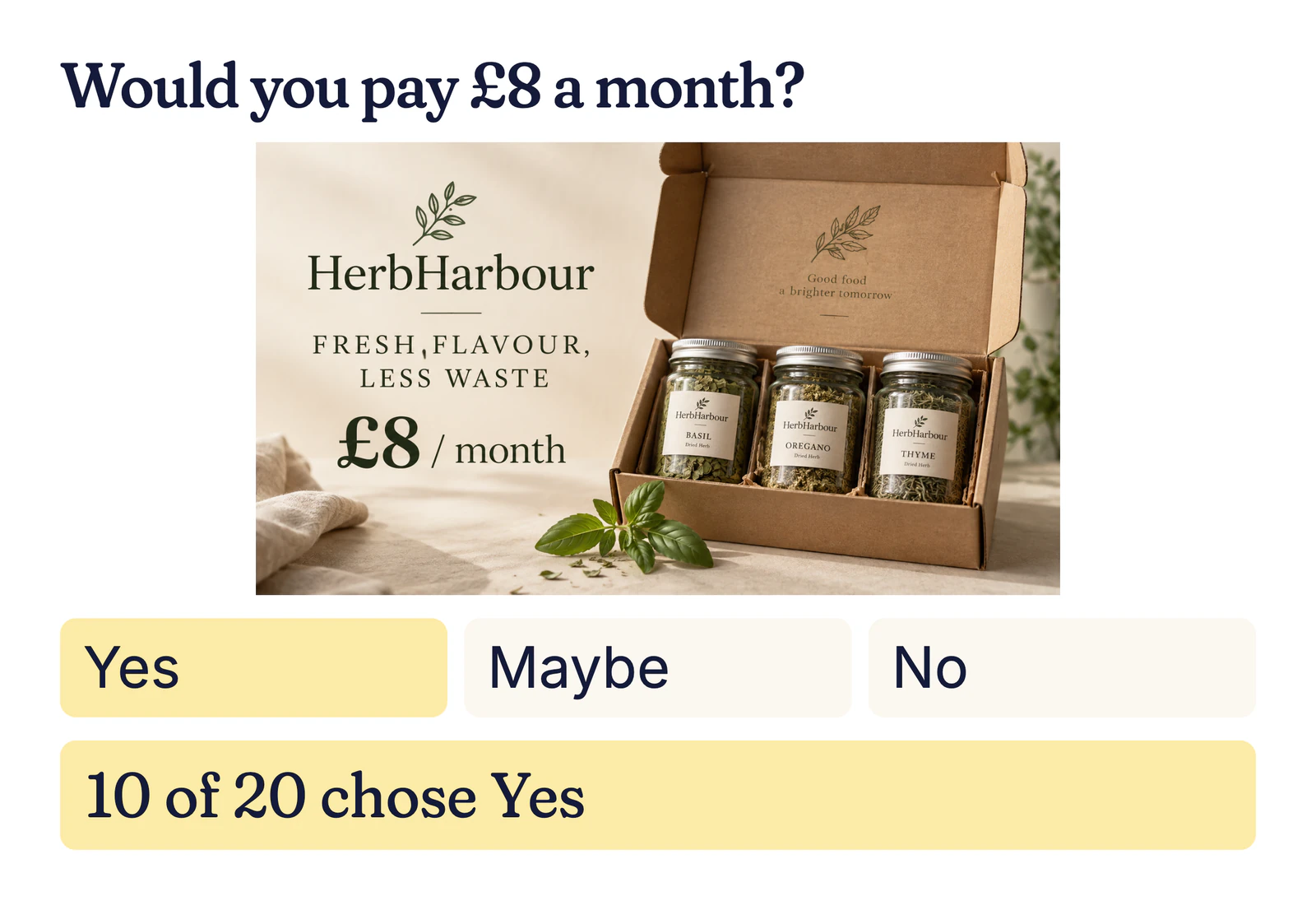
Questions to test a business idea
Give people the offer, not a pitch about how exciting it is. One image can show the service and its price.
- Example: Would you pay £8 a month for HerbHarbour's herb-refill box: yes, maybe or no?
- How useful would this be to you, from 1 to 5?
- What is your first reaction to the offer?
A longer interview about the problem would be valuable, but short answers and follow-ups are planned for later. Today, keep the question answerable at a glance.
Business idea feedback you can use
Illustrative HerbHarbour example: ten of 20 say yes, six maybe and four no. The comments ask what comes in the box, whether the herbs stay fresh and why a refill beats buying them locally. The next job is to explain the value and test it with people who actually buy fresh herbs. Ten ‘yes’ votes are not ten orders.
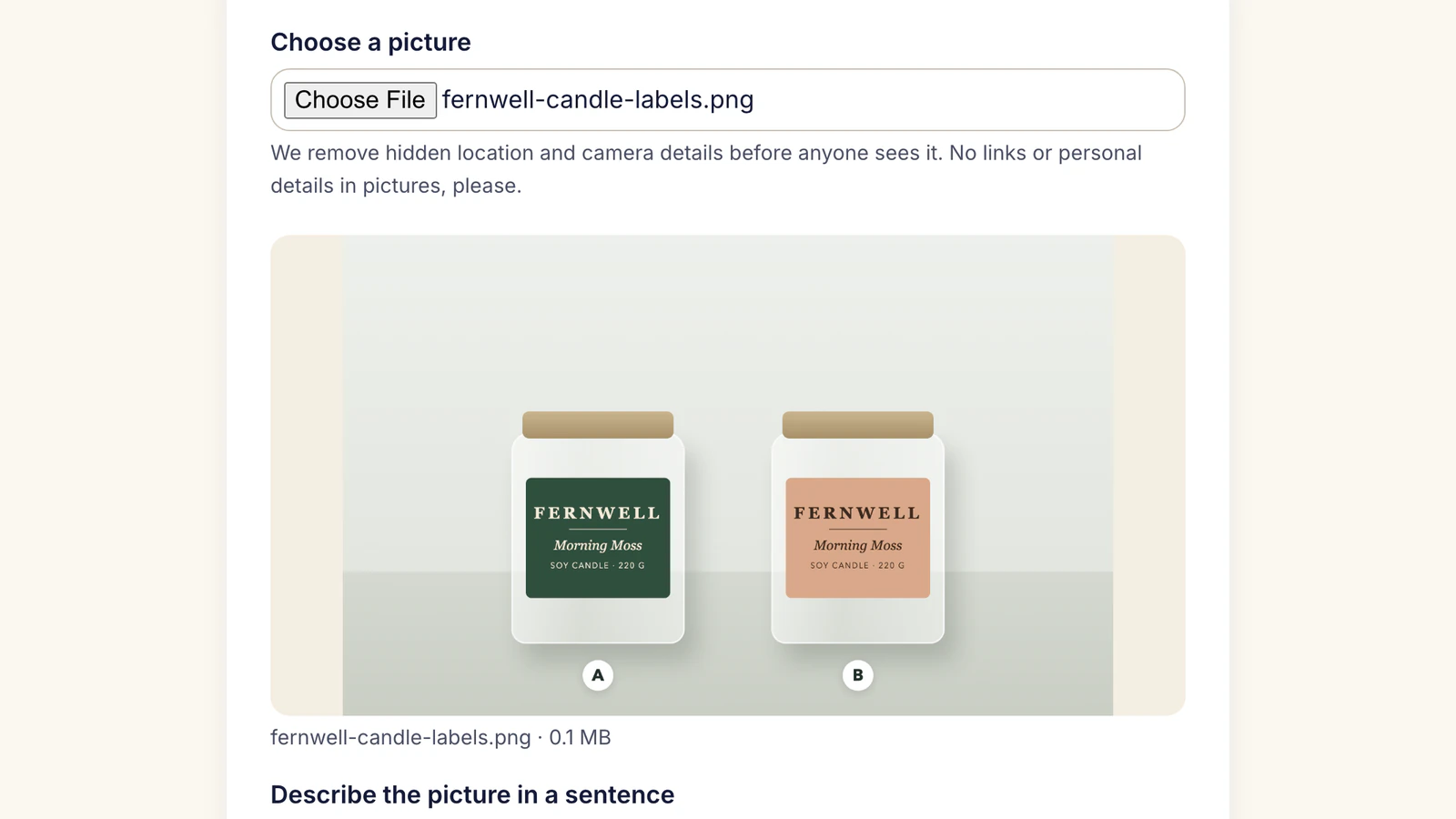
How to test business idea assumptions
- Make a plain card showing the business model, price and what the customer gets.
- Choose one neutral question and a pool of 5 to 50 UK adults. They answer without seeing your name or earlier votes.
- Read all the reasons, especially the objections. Revise the offer, then test it with prospective buyers in the real world.
Other ways to ask an early question can help with a name, concept or price.
Where idea validation stops
Friends may know how much work went into your plan. A stranger sees the £8 price and the few words you put in front of them. That distance can reveal an assumption you have stopped noticing. Answers have signed receipts listing the checks they passed; read what those checks mean.
Honest limit: Stated interest is not a purchase, and a mixed UK pool is not market sizing. If your idea may be patentable, take advice before disclosing details to anyone, including a small answer pool. Questions are shown only to answerers without your name, but they do see the idea on their own screens.

What a quick idea test costs
Asking is free during early access. At paid launch, quick takes start from 30p an answer plus 50p a question (launch example). Twenty quick takes would cost about £6.50, and the quote appears before posting.

Your questions, answered
How do I validate a business idea quickly?
Explain the offer in plain words, show its price and ask one question about what people understand or would choose. Read the reasons behind the votes. A quick reaction can tell you what to clarify next; real buyers, orders or interviews are needed before claiming demand.
Can I test business idea reactions for free?
Yes. Asking is free during early access, by invitation. Show an offer card and ask a focused quick-take question. Treat the result as feedback on the current explanation, not proof that a business model works. Paid-launch pricing is quoted before a question is posted.
How many people do I need to test a business idea?
Twenty offers a useful first set of reactions, while five can expose an obvious confusion. Neither is a representative sample. For HerbHarbour, the objections about freshness and value matter more than the ten ‘yes’ votes. Speak to likely buyers and observe what they do before committing major spend.
Is ‘would you pay’ a reliable signal?
It is a prompt for discussion, not a sale. People can say yes to an £8 box without ordering one, and they may not understand the offer from a single picture. Read why people hesitate, then test the price and the purchase path with actual potential customers.
What does business idea feedback cost?
It is free to ask during early access. At paid launch, quick takes start from 30p an answer plus 50p a question (launch example), making 20 quick takes about £6.50. You see the price before you post. This covers one quick question; it does not pay for interviews or a demand study.
Find out what people really think.
Free during early access. No card needed.
Free during early access. We review requests by hand. Have an invite code? Join