For teams, agencies and business owners
Real reactions from real people, before your customers see it.
Planning market research in the UK? Start with quick consumer research on a homepage, name, advert or price. A small group of UK adults gives picks, reasons and a short summary. Their reactions can catch confusion; they do not represent the wider market. We aim for first answers in about 15 minutes in UK daytime, though it can take longer while the pool is small.

Why businesses ask real people
When first answers may arrive
We aim for first answers in about 15 minutes in UK daytime. Early access can take longer.
Blind and confidential
People see the question without your name or business, and never see each other’s answers first.
A summary you can act on
The split, the reasons in people’s own words and a short summary at the top.
Who answers your questions
Adults in the UK who have joined to give honest first reactions, in their own words. Using AI tools or automation to answer is not allowed.
UK adults, 18 or over
Members confirm they are 18 or over and live in the UK when they join.
Invited, with a passkey
During early access people join by personal invitation and sign in with a passkey on their own device.
Answering blind
They don’t see your name or business, or anyone else’s answer first.
Checked, with a person reviewing
Paste is blocked, there is a minimum time on each question and known-answer checks are mixed in. Anything that looks automated is held for a person to review.
What you can test
Example questions. Yours stay confidential.
Homepages and landing pages
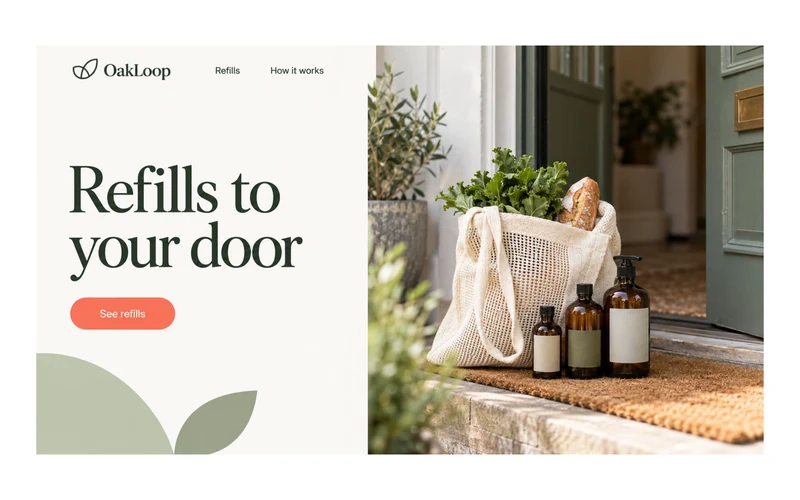
What does it say you do? Who is it for? Would they click?
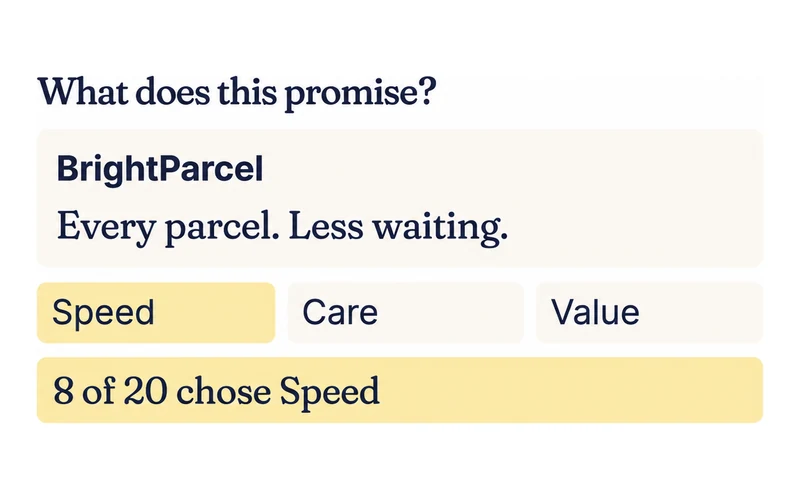
“What does this homepage say to you?”
Names and branding
Which name feels trustworthy, memorable or right for the price?
“Which name would you trust with your money?”
Emails and offers
Does the tone land? Is the offer clear before anyone replies?
“Does this email sound pushy, or just direct?”
Adverts and social posts
Which version stops the scroll, and why?
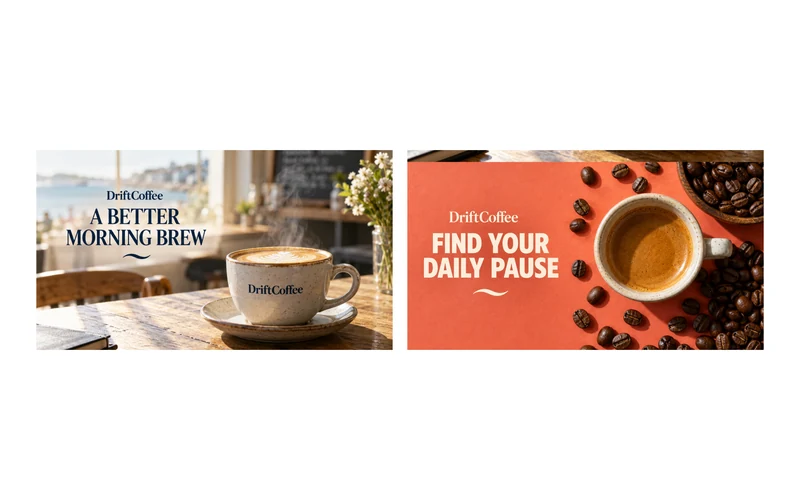
“Which of these two adverts would you stop for?”
Pricing and packaging
Does the price feel fair? Which plan would people pick?
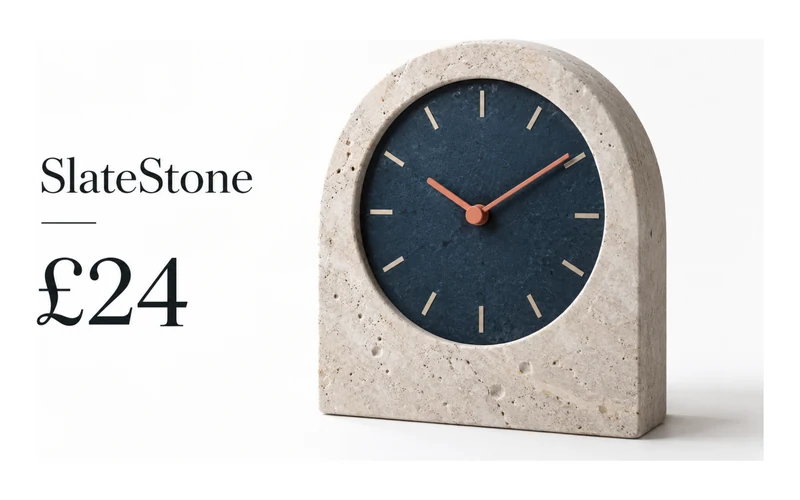
“Is £12 a month cheap, fair or too much for this?”
Ideas and features
Does it make sense to someone who has never heard of you?
“Does this product idea make sense to you?”
Market research for small business: when a quick take helps
A small qualitative check can show what people notice or misunderstand. It cannot size a market or stand in for a representative survey.
Use quick market research when you have a narrow choice, such as two names or two versions of a headline. Read the reasons behind each answer before deciding what to change. If the decision depends on how common an opinion is across a population, commission a study with the sampling method that question needs. Compare research tools by method or look at survey panels.
A DIY market research tip: write a neutral question, show one decision at a time and start with 20 people. Treat the split as a prompt for a better question, not a forecast of sales.
What comes back
What askers get
A short summary, the spread of answers and the reasons behind them.
What does this homepage say to you?
8 of 20
training
6 of 20
delivery
6 of 20
advice
- Example
“I saw training.”
training
- Example
“The people help.”
delivery
- Example
“The offer is broad.”
advice
What a question looks like
Three made-up examples at launch prices, to show the shape of an answer. The businesses and results are not real.
- Example
Café: which offer is clearer?
20 quick takes · £6.50 (launch example)
15 of 20 understood “2 for £5 before 11am”; 9 of 20 misread “Early bird bundle”.
What you might do: Keep the plain offer.
- Example
Agency: which advert stops the scroll?
3 versions, 30 quick takes · £9.50 (launch example)
Version B chosen by 14 of 30. People said it was “the only one that says the price”.
What you might do: Lead with the price.
- Example
Online shop: which main photo would you click?
20 quick takes · £6.50 (launch example)
The lifestyle shot beat the white background 13 to 7: “you can see how big it is”.
What you might do: Test the lifestyle shot as the main image.
Why not just ask an AI?
A model can review copy and suggest options. It cannot report how a particular group of people reacts to the design you show them. People can point to a confusing headline or image and explain why.
“The design is clean and modern. The main message is clear and the call to action is easy to find.”
“I like the clean look, but the call to action could feel friendlier. I wasn’t sure what happens next.”
What happens to your material
The checklist a company buyer runs before trusting a new supplier, answered for today.
| Question a buyer asks | The answer today |
|---|---|
| Who sees my question? | Only the members picked to answer it, without your name or business, and a person at PennyForYours who reviews it before it goes out. There is no public feed. |
| Where is it stored? | Our database and server code run in London (AWS eu-west-2, through our host, Netlify). Uploaded images are stored by Netlify in the US (Ohio) under the UK’s data bridge with the US. |
| Is anything removed from images? | Yes. Hidden metadata such as location and camera details is stripped before storage. The picture itself isn’t changed. |
| Can members copy it? | Members see your image or text on their own screen, so it could be screenshotted or photographed. Copy-resistant display, a per-member watermark and a formal member confidentiality undertaking are planned. Until then, don’t upload anything you couldn’t show to a stranger. |
| Who owns the answers? | You keep all rights in what you upload, and you can use the answers for your own decisions. You can’t present them as customer reviews or testimonials. Written ownership and licence terms for business use are planned before paid questions open. |
| How long do you keep it? | While your account is open. Ask us to delete your account and we remove your questions and images within 30 days, after checking the request is yours. |
| Can I prove the answers came from people? | Each answer has a signed receipt that anyone can check against our published public key. It records the checks that answer passed. |
| Do you track visitors? | Optional Google Analytics records visits to public information pages only after you accept it. We show no adverts. |
Privacy in plain English · Full privacy notice · How receipts work
How it works
Ask
Get real, unbiased opinions on what you’re working on.
Write a question
Share what you want feedback on.
Choose how many answers
Pick how many people and what kind of answer you need.
See what people think
A clear summary first, then every answer.
Quick consumer research, priced per answer
A small qualitative check from UK adults, not a representative survey. Asking is free during invitation-only early access. At paid launch you pay per answer, by answer type, and see the total before you ask.
| Answer type | What you get | Time each | Asker pays per person |
|---|---|---|---|
| Quick take | Pick or rate, plus one line of why | about 30–45 seconds | from 30p |
| Short answerLater | 2–3 sentences | about 1–2 minutes | from 80p |
| Considered feedbackLater | A paragraph or a list of points or ideas | about 3–5 minutes | from £1.53 |
| In-depthLater | Structured feedback: what works, what does not, one change, and their own experience | about 10–20 minutes | from £3.83 |
| Expert viewLater | A verified professional in the field you choose | varies | their rate, shown first |
| Idea briefLater | Many people submit ideas; you pay the best | to a deadline | prize pool from £50 |
Plus 50p per question for screening and the summary. These are launch examples. Early access is free on both sides.
| Test | Questions and answers | Total |
|---|---|---|
| Name or logo check | 1 question · 20 quick takes | £6.50 |
| Homepage first impression, bigger sample | 1 question · 50 quick takes | £15.50 |
| Three advert versions, one question each | 3 questions · 20 quick takes each | £19.50 |
| Email tone, with reasons | 1 question · 20 short answers | £16.50 |
| Pitch or pricing page | 1 question · 10 considered feedback | £15.80 |
| A weekly check for a month | 4 questions · 30 quick takes each | £38.00 |
Each total is the price per answer for each person, plus 50p per question for screening and the summary. These are launch examples: early access is free, and you always see the total before you ask.
How much does market research cost in the UK? For this quick-take launch example, one question with 20 answers is £6.50; 50 answers is £15.50. An agency study needs its own scope and quote. Compare what each method can tell you before comparing totals.
How pricing works
Early access is free on both sides. These are the launch examples for when paid questions open.
Pay per answer, not per survey
At paid launch, choose a quick take and how many people. The launch example is from 30p a person, plus 50p a question for screening and the summary. Longer feedback and expert views are planned for later.
You see the number first
When paid questions open, askers will see the price before asking and members will see the pay before answering. Expert rates are planned for a later release.
Planned, not built yet
These formats and controls are planned and have no release date.
- Choosing who answers by age, region, interests or profession.
- Team accounts with shared billing and roles.
- Invoices, credits and monthly billing for business askers. During early access there is nothing to pay.
- Business terms covering confidentiality, ownership of answers and a data processing agreement.
- Longer formats: short answers, considered feedback, in-depth reviews, expert views, ranking and tap tests.
- A measured speed figure. Today we give an aim, about 15 minutes for first answers in UK daytime. Once we have enough closed questions we’ll publish the real median.
If one of these decides whether you can use us, tell us. It helps us choose what to build next.
Trust and proven human
Verified people
Every answer comes from a verified person.
Fair, visible pay
Askers see the price first. Members see the pay before they answer.
Questions stay confidential
Only the people answering see your question. No public feed.
Want this inside your own tools?
Test REST or MCP from your app or agent with synthetic sandbox answers now. Live human answers through these integrations are planned.
What businesses ask
Common pre-launch checks, from advert and message testing to pricing and packaging.
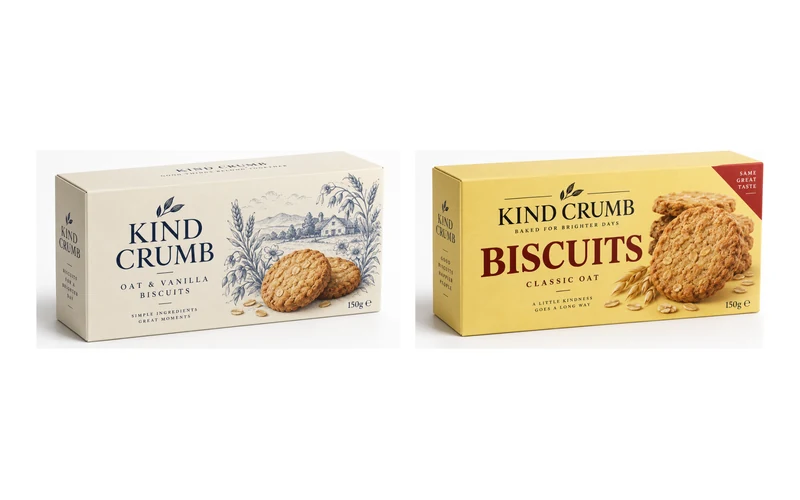
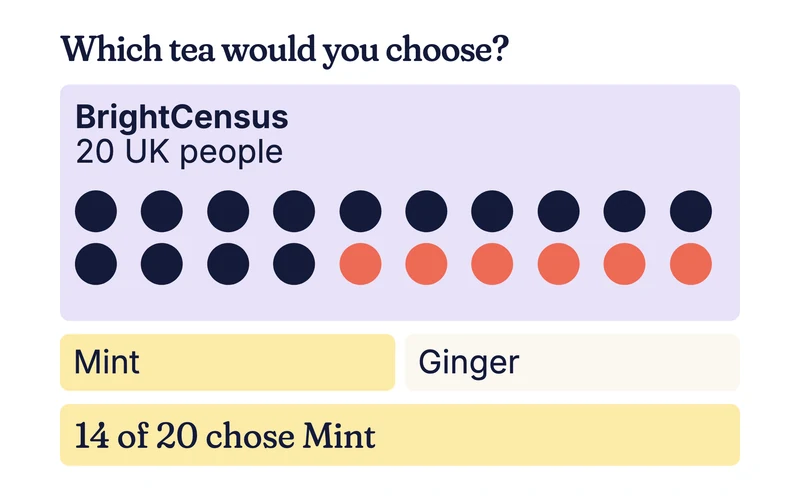
Questions businesses ask
Who answers?
Verified UK adults, 18 or over, who join by invitation during early access, sign in with a passkey on their own device and answer blind. They don't see your name or business, or anyone else's answer first.
Can I choose who answers?
Not yet. Targeting by things like age, region or interests is planned. Today each question goes to a mix of verified members in the UK.
Is my material kept confidential?
Your question is shown only to the people answering it, without your name or business, and never in a public feed. Our database is in London; uploaded images are stored by our hosting provider in the US under the UK's data bridge. Don't upload anything you couldn't show to a stranger yet.
Who owns the answers?
You keep all rights in what you upload, and you can use the answers for your own decisions and share them inside your organisation. You can't present them as customer reviews or testimonials. Written business terms on ownership and confidentiality are planned before paid questions open.
How fast are answers?
We aim for first answers in about 15 minutes in UK daytime. Early access can take longer. Watch the answers arrive, but wait until the pool closes for the final split and summary. You see a time estimate before you ask; it is not a promise.
What will a typical test cost?
Launch examples: 20 quick takes on one question is £6.50; 50 quick takes is £15.50; 20 short answers is £16.50. Each is the price per answer plus 50p for the question. You see the total before you ask, and early access is free.
Can I get an invoice?
During early access there is nothing to pay, so there are no invoices. How billing and invoices work for business askers will be set out before paid questions open.
Can we connect it to our own tools?
Yes, in a sandbox today: a REST API and an MCP server for AI assistants, with a signed receipt for each answer. Keys are issued by invitation during early access. See Developers.
Is this market research?
It's quick, qualitative feedback from verified people: picks, ratings and reasons. It is not a representative survey, because you can't yet choose who answers. Use it to catch confusion and compare options before you spend on a bigger test.
Can we use the results in marketing?
You can say what you learned, but you can't present answers as customer reviews or testimonials, or suggest the people answering are your customers. UK consumer law treats fake reviews as unlawful, and our terms forbid it.
Who is behind PennyForYours?
David Bryan, in the UK, while the business is being set up. No company has been formed yet. Company details will be published here once it is.
How much does market research cost in the UK?
Asking is free during invitation-only early access. At paid launch, one question with 20 quick takes is £6.50; 50 quick takes is £15.50. These are small qualitative checks, not a representative market study. If you are looking for cheap market research, compare the method and sample before comparing prices. Ask a research agency for a quote based on the work you need.
What is the quickest way to do consumer research?
Start with one decision: for example, which of two homepage messages people understand. Show both options, ask a neutral question and read the reasons as well as the count. We aim for first answers in about 15 minutes in UK daytime, but early access can take longer. For a representative result, plan a larger study with a suitable sample.
Asking for a team, an agency or your clients?
Tell us roughly how many questions a month you expect and what you need: invoices, seats, a sandbox API key or choosing who answers. A real person replies, usually within 2 working days.
Find out what people really think.
Free during early access. No card needed.
Free during early access. We review requests by hand. Have an invite code? Join