Compare · Research tools
Market research tools for small businesses, compared
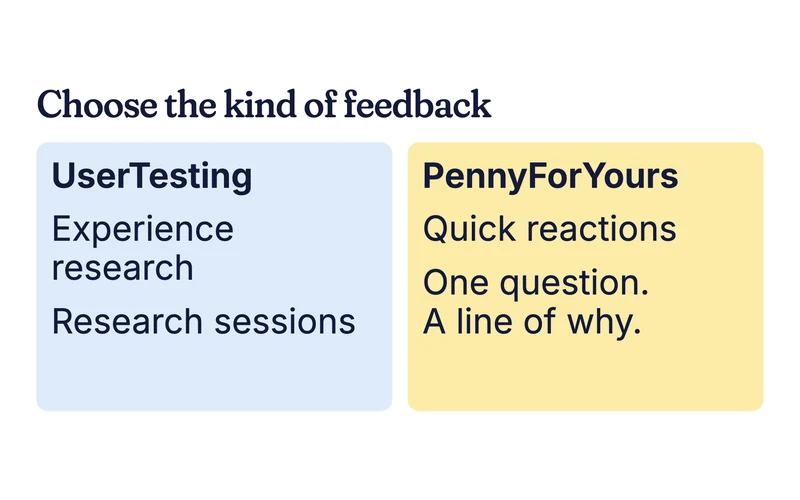
A small business can spend too much on research that does not answer its next decision. Market research tools include forms for people you already know, panels for selected audiences and usability tests for watching a task. A consumer research platform may help with a longer study; PennyForYours offers one short question to a mixed group of UK adults. Choose the evidence you need before comparing prices. Last checked: 7 October 2026.
We review requests by hand.

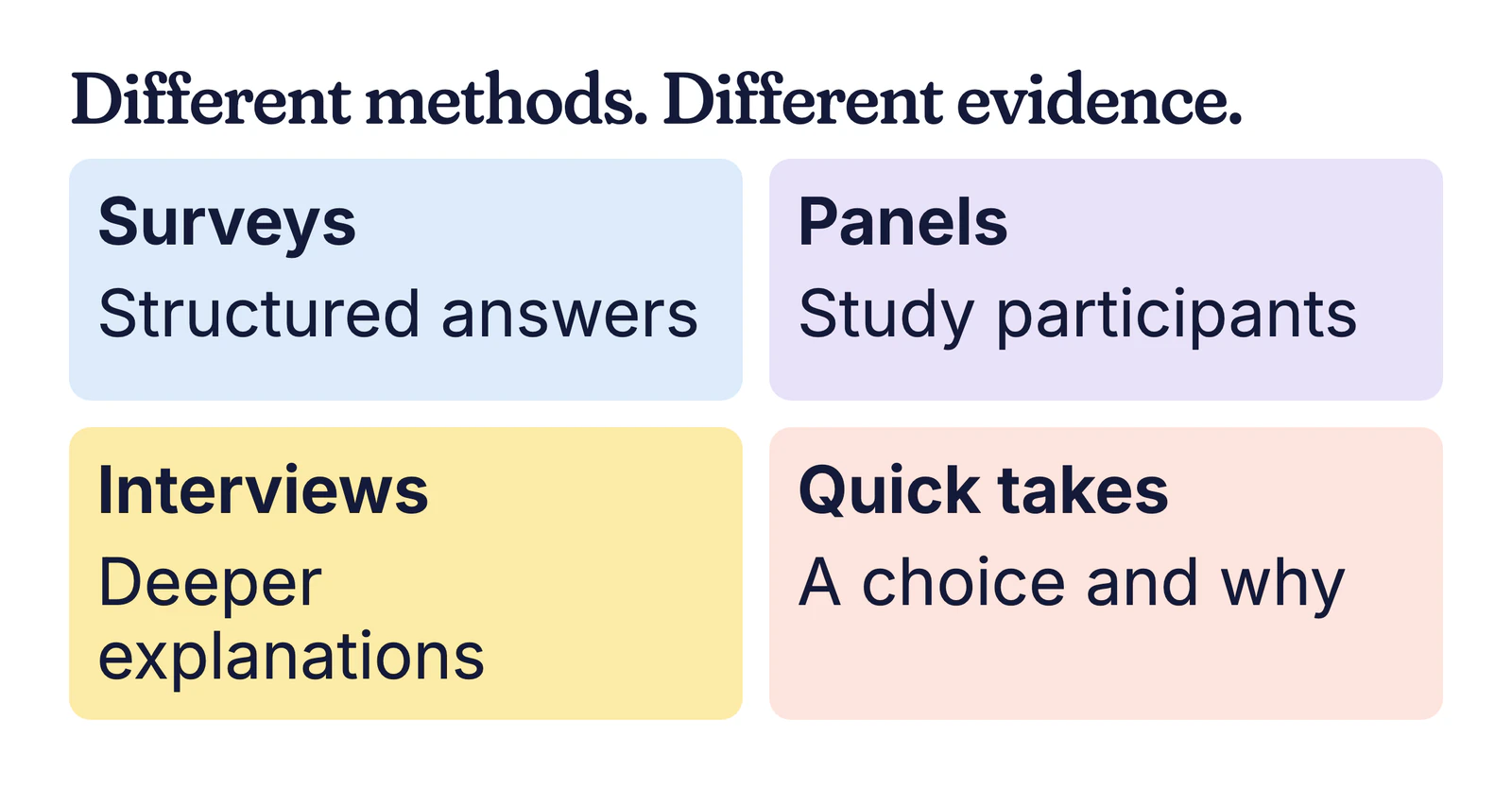
Market research tools compared by method
Start with the decision, then pick a method. These are the approved tools to compare; each does a different job.
| Method | Tools | Useful when |
|---|---|---|
| Build a form | Google Forms and Typeform | Collect responses from people you can reach; check question design and recruitment. |
| Survey plus panel | SurveyMonkey and SurveyMonkey Audience | Build a survey and buy access to a selected audience when your own list is too narrow. |
| Larger research studies | Qualtrics, Attest, Pollfish and YouGov Surveys | Compare audience selection, survey controls and the amount of analysis you need. |
| Research participants | Prolific | Recruit eligible people for a study; plan length, reward and platform fee. |
| Product and design tests | Lyssna and PickFu | Use task-based UX tests or preference polls; check who responds and what the method measures. |
| One quick UK reaction | PennyForYours | Ask 5 to 50 UK adults one short question; no demographic targeting yet. |
A survey with a targeted panel can answer a different question from a quick reaction. Neither method proves what people will buy. If the stakes are high, combine answers with interviews or behaviour you can observe.
Choosing a consumer research platform
Use a panel when the audience matters
A panel makes sense if you must hear from a defined group, such as first-time buyers in a particular category. Pollfish and Prolific both describe audience selection on their official sites [1], [2]. The group you can reach is part of the method, not an optional extra. If you need a representative estimate, plan the sample and question wording with that aim from the outset.
Use usability testing for behaviour
A screenshot question can show whether a message is clear. It cannot show a person getting stuck during checkout. Use a task-based test or an interview when the steps matter. Lyssna's published methods include first-click and prototype tests [3]. Those are more suitable for observing a route through a product than a one-question preference check.
Use a quick take before committing to a direction
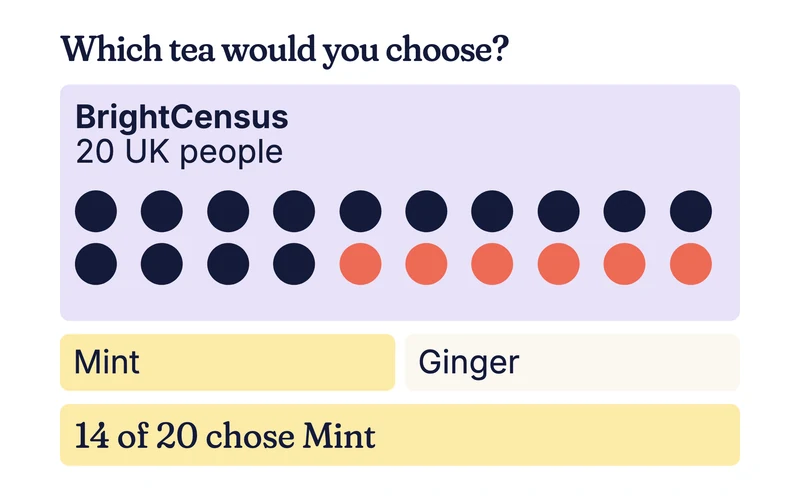
Imagine a small shop choosing between two product labels. Ask which is easier to understand and request one reason. If 13 of 20 people choose one label, read the seven reasons on the other side before printing anything. The split is a prompt to investigate; those 20 answers do not establish sales demand. Idea validation methods put this first check in context.
Official product pages checked 7 October 2026: [1] Pollfish survey tools; [2] Prolific research workflow; [3] Lyssna research methods. The comparison table links each other provider directly to its official product page. Method advice is our interpretation. Confirm live features and pricing with the provider.
Where a quick take fits in research
For the headline example, show up to 280 characters of text or one image with both versions. Ask 5 to 50 UK adults for a pick between two or three options, a rating from 1 to 5, or a first impression. Each response includes a reason. There are no demographic filters yet, so the result can reveal confusion but cannot represent a customer segment.
You see the split or average, the reasons, a short summary quoting up to three answers without names, and a signed receipt per answer. The receipt lists checks passed; it is not proof that the sample represents your market. Our trust page explains the checks and their limits. We aim for first answers within about 15 minutes in UK daytime, but early access may be slower.
At paid launch, the asker price starts at 30p an answer plus 50p a question (launch example). Asking is free during early access. That price buys a quick signal, not recruitment of a specific buyer group or a full research report. If the result will drive a costly decision, put it beside interviews, sales evidence or a targeted survey.
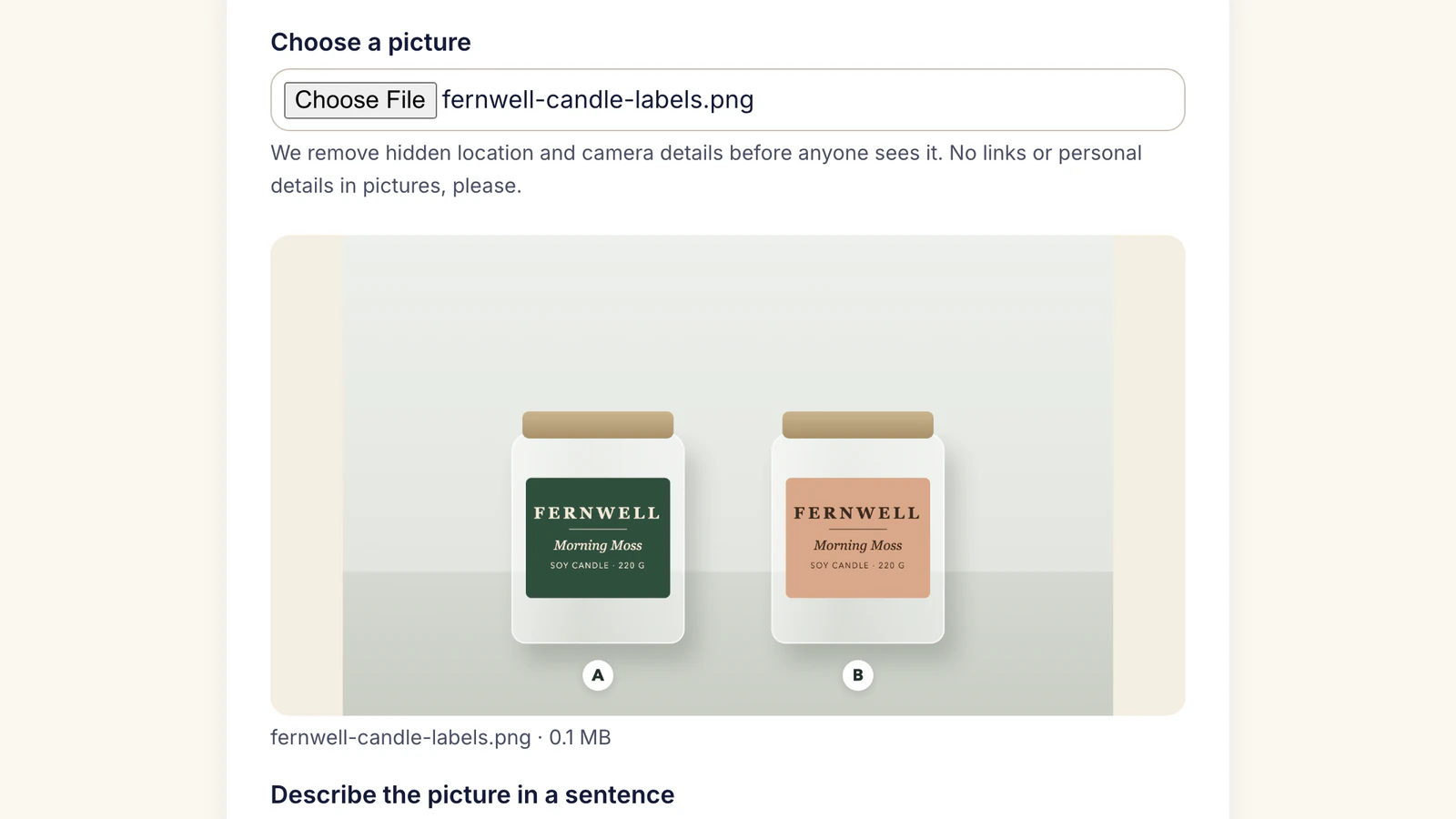
Start with a question you can act on
Suppose two headlines are ready for a shop page. Ask which explains the offer more clearly and let either win. If the question is how often a defined buyer group shops, you need a different sample and probably more than one question. The asking guide shows quick-take formats; survey-panel planning covers the wider route.
Request early access for a small headline check. For a longer questionnaire, compare survey platforms; to watch checkout behaviour, consider usability testing. If the decision is costly, combine the first reaction with interviews or observed behaviour.

Your questions, answered
Which research method fits a small business?
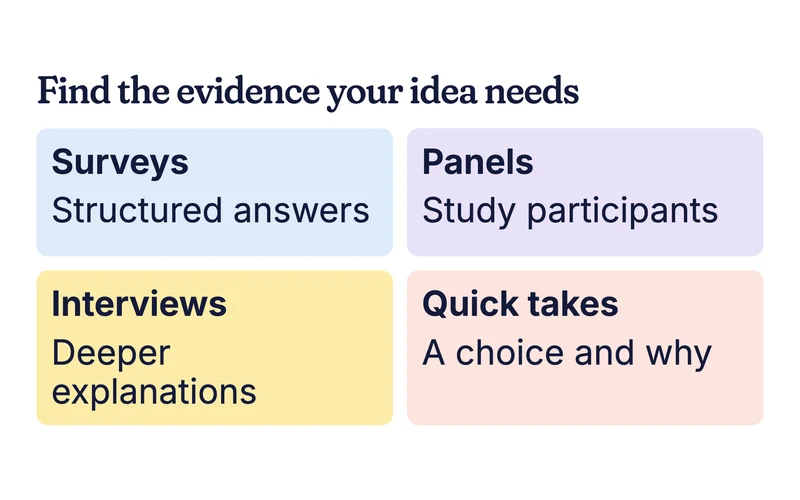
The best tool depends on whether you need a preference, an explanation or observed behaviour. Start with customer conversations for a problem you do not yet understand; use a targeted panel if the audience is specific. A small quick take can help choose between clear options, but its sample is too small to support a market-size claim.
How much does market research cost in the UK?
Cost depends on method, sample and the time each person spends. Official platforms publish different models: Pollfish describes pay-per-response surveys [1], while Prolific charges participant rewards plus a platform fee [2]. Do not compare those prices without matching the research task. PennyForYours asking is free in early access; at paid launch, a quick take starts from 30p an answer plus 50p a question (launch example).
What is a consumer research platform?
It is a service for collecting evidence from people about a product, message or behaviour. Some recruit a selected panel for your survey; others host a usability test or an interview. Check who answers, how they are selected and what you receive back. Such a service with broad targeting is better than our current quick takes when eligibility matters.
Can I do market research for free?
Yes. You can interview customers, observe how they use a product, or test a landing page with consent and a clear question. PennyForYours is free to ask on during early access, by invitation. Free feedback still takes preparation: avoid leading questions and do not treat a convenient group as a representative sample.
Is PennyForYours a replacement for a survey panel?
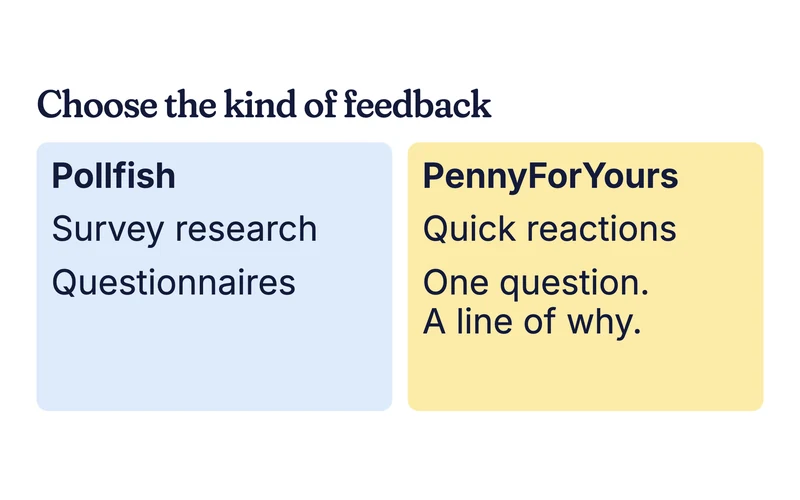
No. It collects short qualitative reactions from a small pool of UK adults, with a simple count alongside the reasons. It cannot currently target a demographic or run a multi-question survey. Use a panel if your decision depends on a defined group, a longer questionnaire or a measured estimate of the population.
Can I target a particular age or region?
Not yet. The current pool is UK adults aged 18 or over, and demographic targeting is planned for later. If you need views from a particular age group, region or customer segment now, choose a tool that already offers those filters and check how it verifies them. A general UK reaction may still help spot unclear wording.
Find out what people really think.
Free during early access. No card needed.
Free during early access. We review requests by hand. Have an invite code? Join