Developers · Human in the loop
Human-in-the-loop AI: an API for real human judgement
Human in the loop AI is useful when software needs a person's judgement before acting. PennyForYours is building a human in the loop platform for short questions to 5 to 50 verified UK adults. Its crowdsourcing API is available by invitation in a sandbox, where every answer is synthetic. Live human responses through the API are not open yet.
Last checked
When a human in the loop platform helps
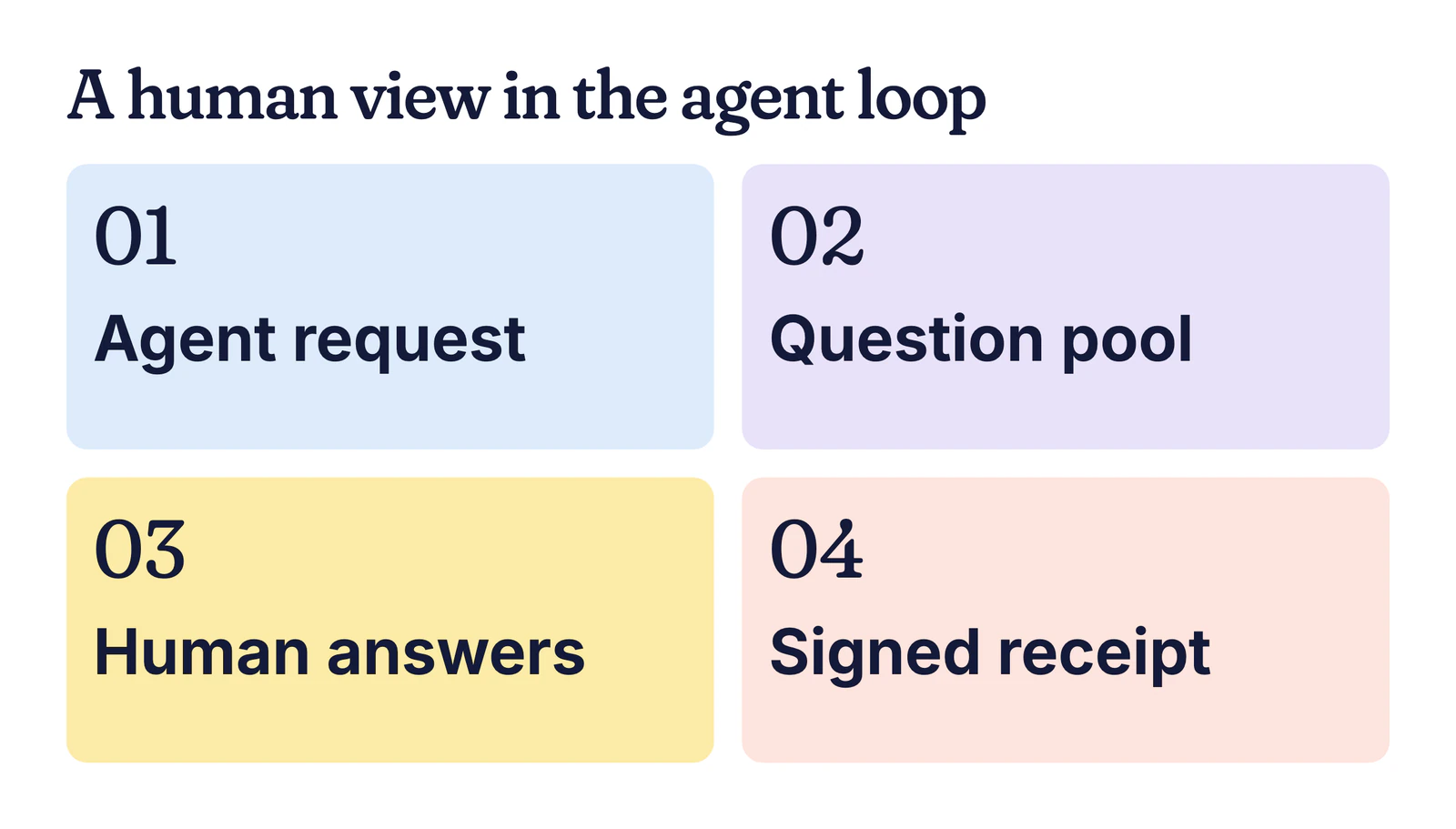
Once live answering opens, use this human in the loop platform when a decision needs a first reaction rather than a calculation. Suppose an agent has drafted two replies to a customer. Before it sends one, it could ask five people which is clearer and what tripped them up. The same pattern could work for a delicate email or two product images. Keep the question neutral and put the result in front of the person who owns the decision. The quickstart shows the sandbox REST flow.
A small pool may give you a direction and reasons to inspect. It does not establish what a whole market would do. Read the comments alongside the split, especially when the choices are close.
Sandbox only during early access. Its synthetic test members let you test the integration; they provide no customer evidence. Live requests, paid answering and targeted panels are not open. A question goes to 5 to 50 people. If you need thousands of labels, or a decision before the next API call returns, this is the wrong tool.
Request and response from a crowdsourcing API
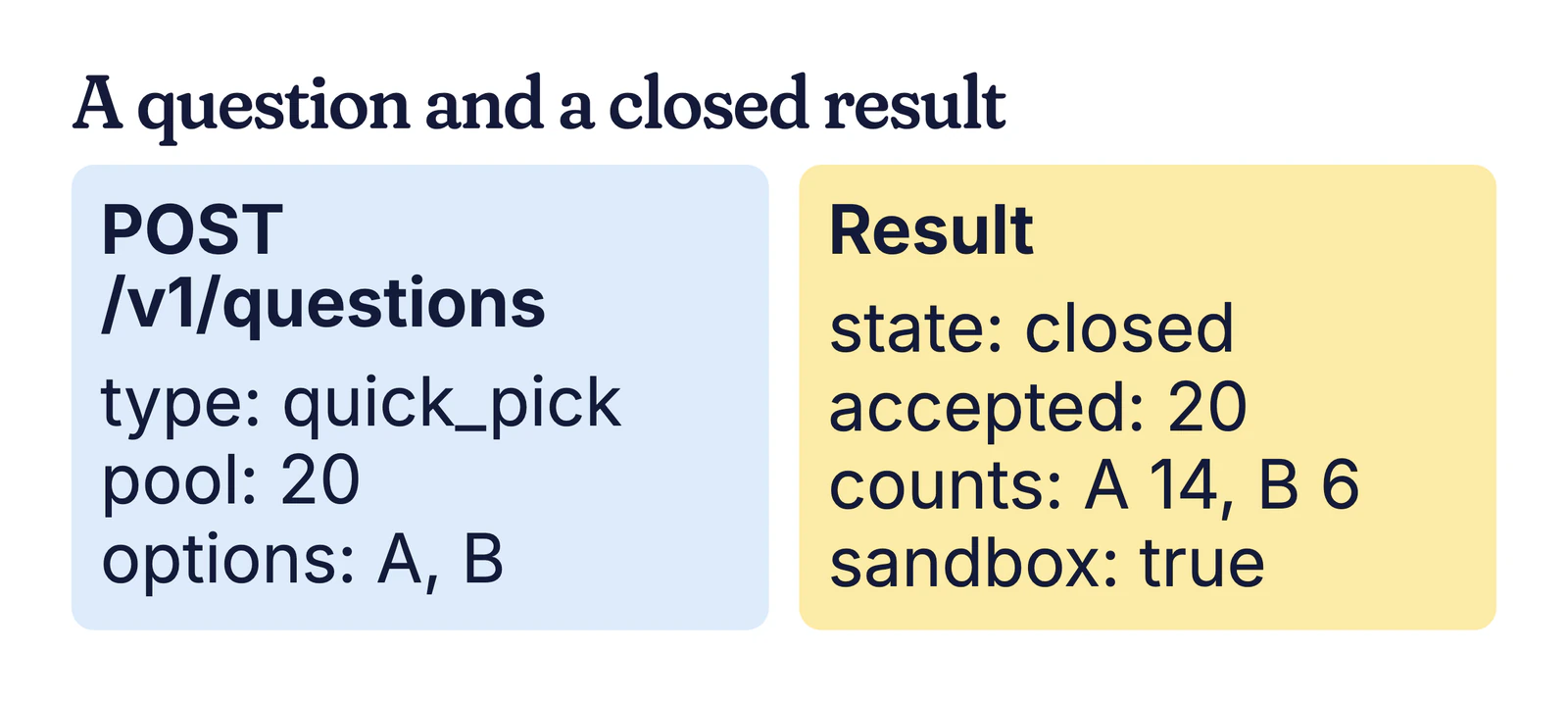
Start with GET /v1/question-types. You can request a launch-example quote, then send the question with a unique idempotency key. This example uses a sandbox key and fictional values:
POST /v1/quotes
Authorization: Bearer pfy_test_...
Content-Type: application/json

{"type":"quick_pick","prompt":"Which reply sounds clearer?","options":["Reply A","Reply B"],"pool":5}

POST /v1/questions
Idempotency-Key: example-unique-request-1

{"type":"quick_pick","prompt":"Which reply sounds clearer?","options":["Reply A","Reply B"],"pool":5,"quote_id":"example_quote_id"}
POST /v1/questions returns a question ID and cursor. Pass both to GET /v1/questions/{id}?cursor=…&wait_seconds=25 to wait for a change. The result contains the count or rating, individual reasons and a short summary. In the sandbox, every answer is marked synthetic. One quick judgement call is not a substitute for a full user study.
Check a human in the loop AI receipt
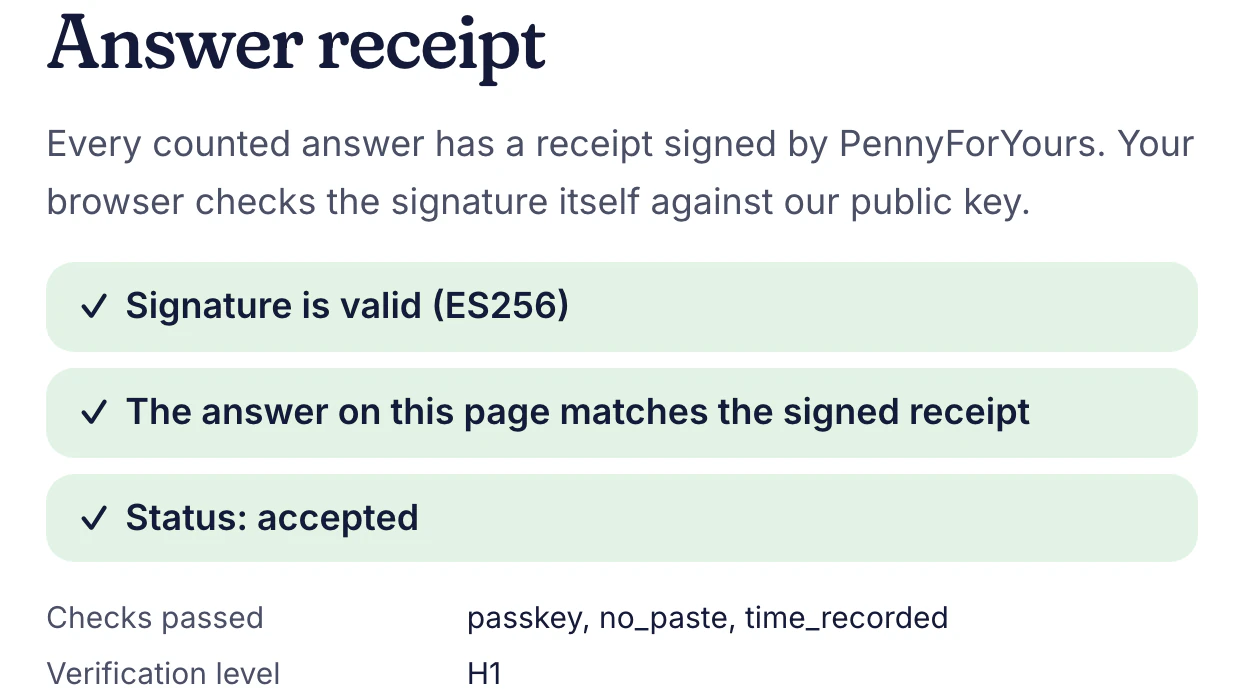
Each answer has a signed ES256 JWS receipt. It binds the question, the exact asset shown, the answer and its status without naming the member. Verify a live receipt against /.well-known/jwks.json. Sandbox receipts use /v1/sandbox/jwks.json and explicitly say they are synthetic; they are not proof that a person responded. The receipt guide has verification steps and the claim fields.
API pricing and current limits
Nothing is charged for synthetic sandbox answers. Asking is free during early access. At paid launch, a quick take is planned from 30p an answer plus 50p a question (launch example); 20 quick takes come to about £6.50. These are asker prices, and the paid launch has no date. A sandbox key is issued by invitation. See developer pricing and current request limits before building around a particular rate.
Questions before integrating
What is human in the loop AI?
How long do human answers take?
Is there a crowdsourcing API for opinions?
Do sandbox answers come from real people?
How can I check that a person answered?
Can I target a particular audience?
Get a sandbox key
Use the developer route on the contact page. A real person replies.