Two options · Preference test
Preference tests: which one do people choose?
A preference test can tell you which of two soap packs people choose and what caught their eye. If the question in the room is “which design is better?”, decide what better means first: clearer on a shelf, more suitable for a gift, or easier to recognise. Then ask verified UK adults for one pick and a reason. We aim for first answers in about 15 minutes in UK daytime; replies may take longer for now.
We review requests by hand.

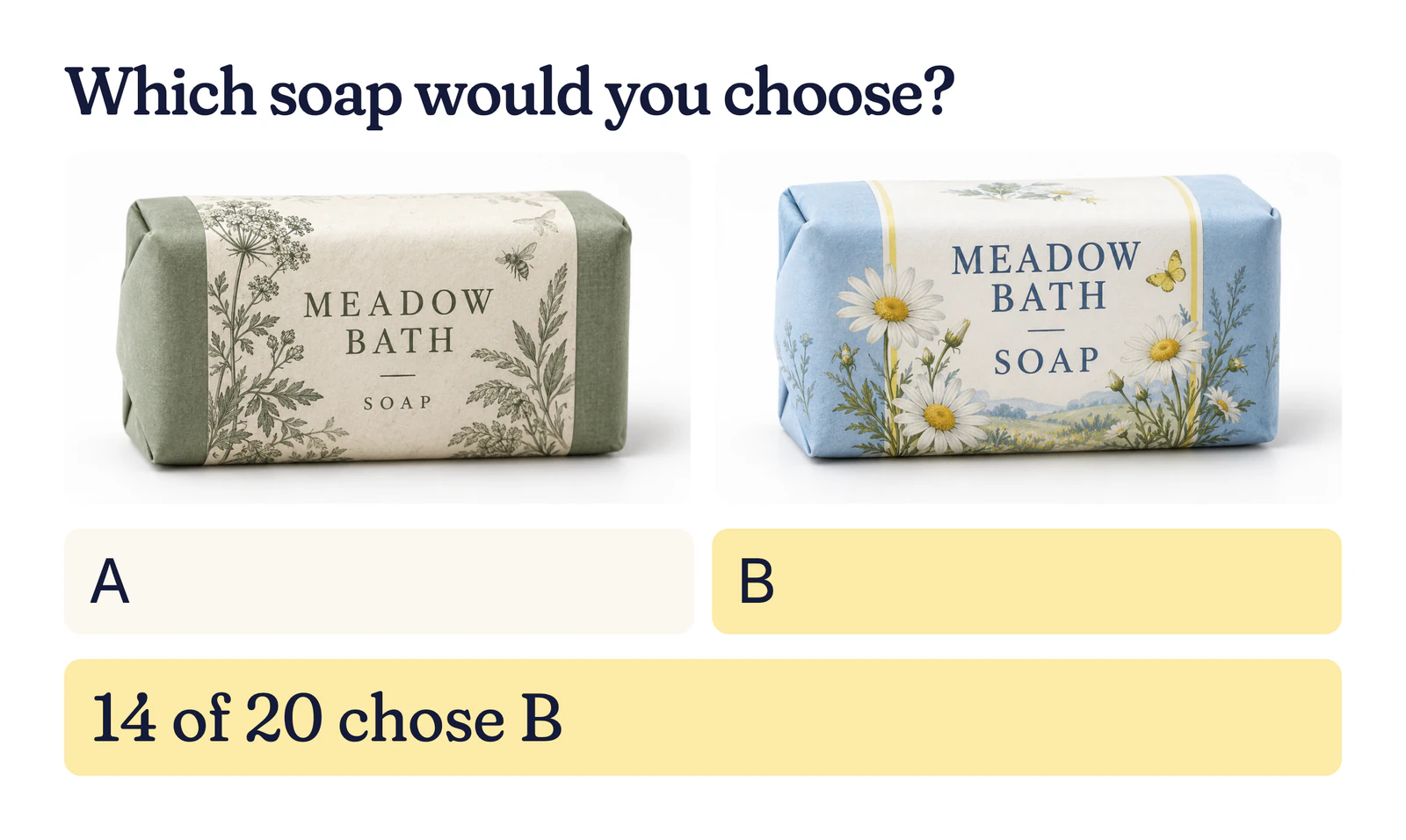
Which design is better for this job?
Give the choice a purpose. MeadowBath has two soap packs: A is quiet cream and sage; B is pale blue with a bold “SOAP” label.
- Example: Which pack would you choose for a gift?
- Which one makes the product easiest to recognise?
- What is the first detail you notice?
Ask one of those questions per quick take. A separate first-impression ask can check what the packaging communicates before people see a rival.
Read the choice and the reason behind it
Illustrative MeadowBath example: B gets 14 of 20 picks; A gets six. People notice B’s clear product word and brighter colour. Several like A’s calmer look but are unsure what it contains. If the brand prefers A, adding a plain product cue may be a better next move than copying B’s colour. This split is a stated choice, not evidence of shelf sales.
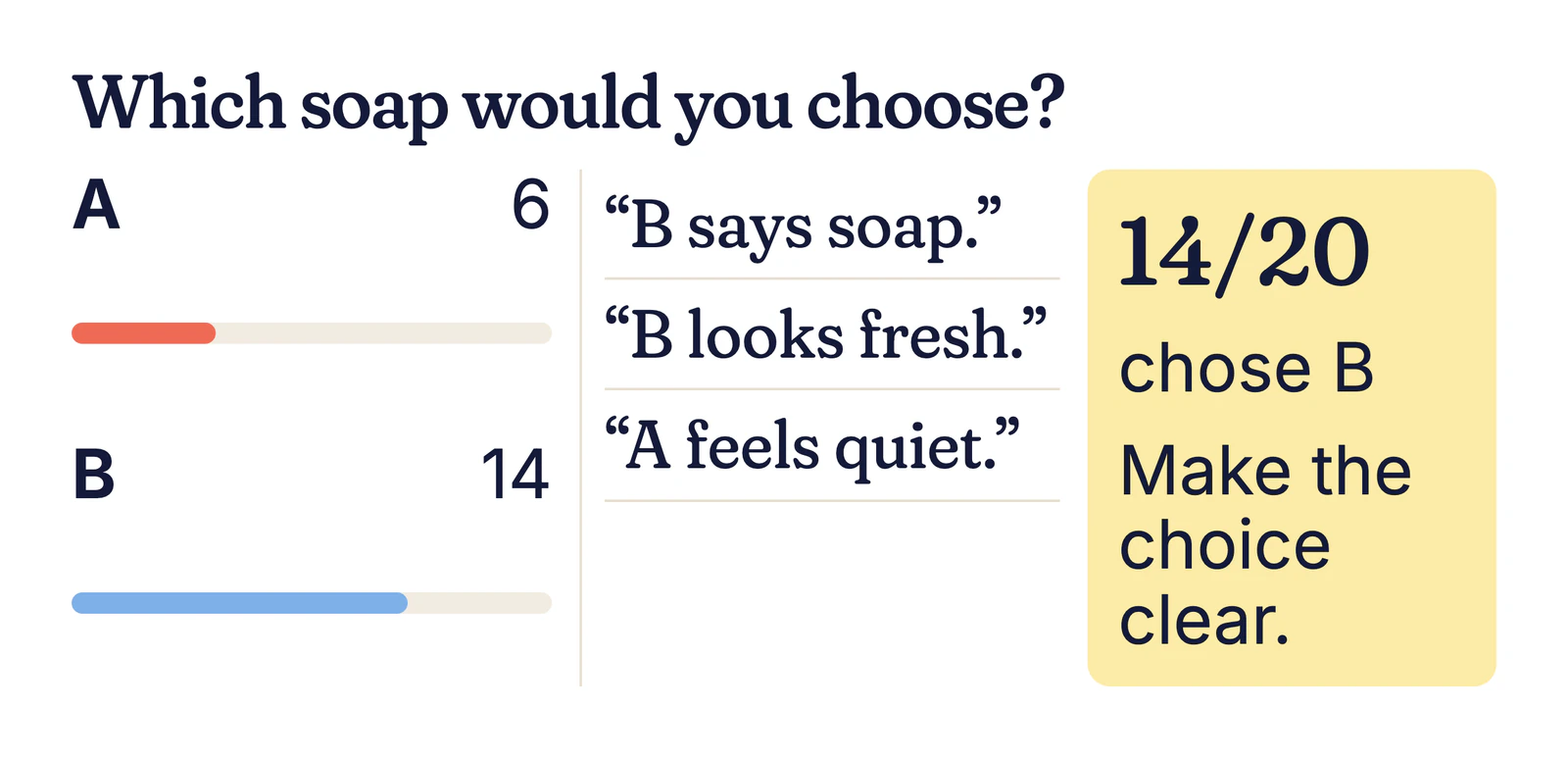
How to run a fair preference test
Keep the pack images at the same scale, in the same light and against the same background. Ask one neutral pick-one question; people choose without seeing earlier votes. If the result is close or the decision is expensive, repeat the test with left and right swapped. Automatic position randomisation is planned, so today that second layout is yours to make.
Browse other quick formats if you need to test meaning before preference.
Why reasons matter beside the split
“Which design is better?” is only useful when the test has a job. A gift-shop buyer might value a calm look; someone scanning a shelf may need to read “SOAP” at a glance. The reason behind each pick tells you which of those problems the design solved. See how answers are checked.
Honest limit: A small, mixed UK pool states what it prefers in an image. It does not represent your selected customer segment or predict purchases. Side-by-side position can also affect choice; swap the positions in a second run before treating a close result as a winner.

What it costs
Asking is free during early access, by invitation. At paid launch a quick take starts from 30p an answer plus 50p a question (launch example); 20 quick takes would come to about £6.50. You see the quote before asking.

Your questions, answered
What is a preference test?
Show two or three options and ask people to pick one for a stated job. MeadowBath might ask which pack looks like a gift, for example, instead of which colour people like. You get a split and the reason behind each pick. Those reasons help you judge whether the design is doing the job you set.
How do I know which design is better?
Decide what “better” needs to achieve, then write the question around that job. A gift pack may need to feel appealing; a product label may need to be unmistakably clear. Read the minority reasons too. The six people who chose MeadowBath A may value something the winning count hides.
How many people should I ask for a preference test?
You can choose a pool of 5 to 50 verified UK adults. Twenty is a useful small starting point for reading reasons, but it is not a representative sample. A close result should be treated as uncertainty, not rounded into a winner.
Can I randomise left and right?
Automatic order randomisation is planned, not available in the current quick-take format. If position might matter, repeat the comparison with the options swapped and compare what people say. Do not combine two runs as if they used an identical presentation.
Can I compare three options?
Yes, a pick-one question can show two or three options. Give each similar space and keep the wording parallel. A three-way split from a small pool will be noisier than a clear two-way choice, so the reasons become especially important.
How much does this test cost?
An early-access preference question is free, by invitation. With the example paid-launch rate, 20 choices and their reasons would cost about £6.50: 30p per answer plus 50p for the question. Check the quote before posting. If the split is close, a second, revised comparison would be a separate question.
Find out what people really think.
Free during early access. No card needed.
Free during early access. We review requests by hand. Have an invite code? Join