For sellers · Product names
Product name testing with real people
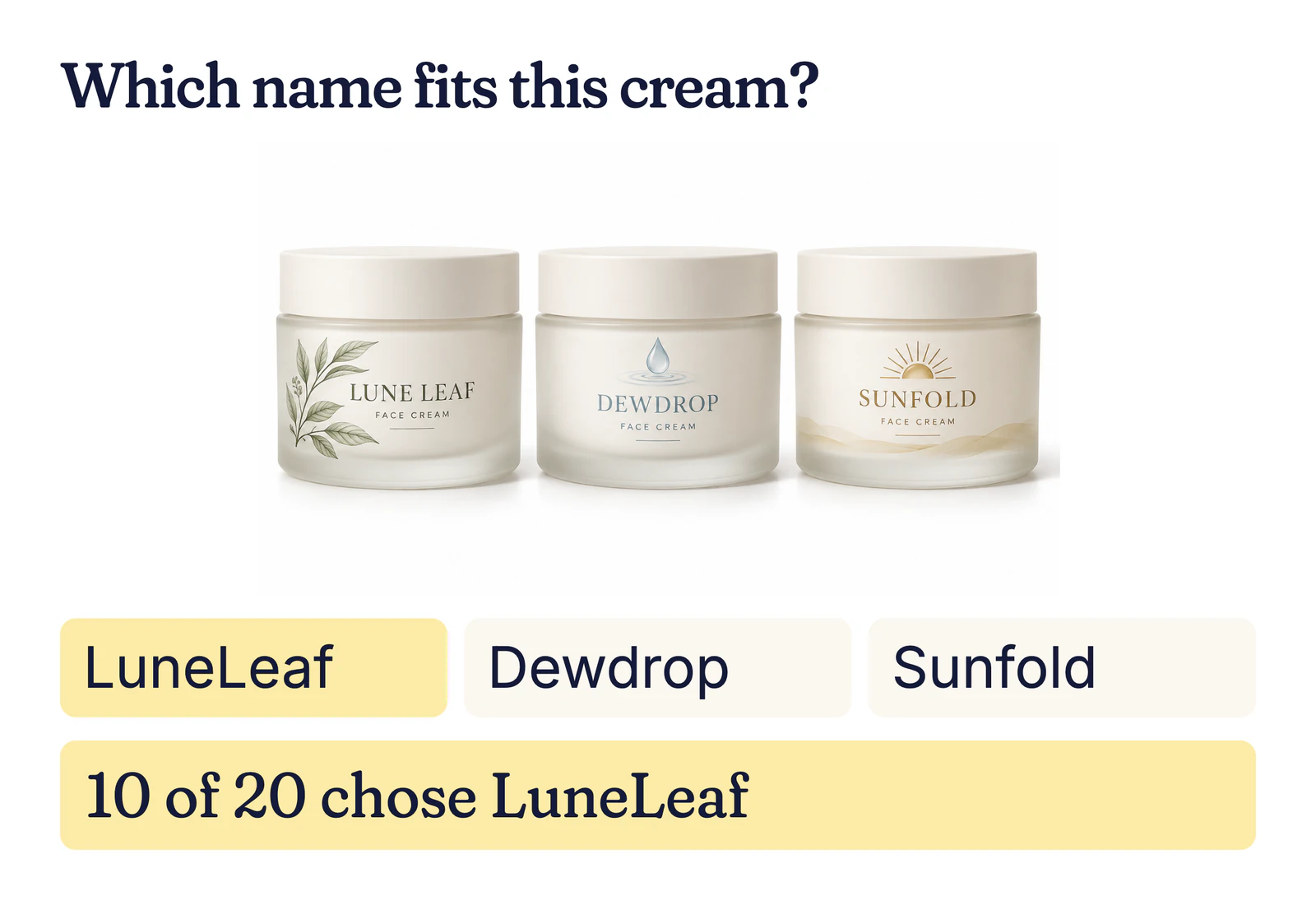
Product name testing works better when the words sit on the product, not in a bare shortlist. LuneLeaf, Dewdrop and Sunfold may sound different once they appear on the same face-cream jar. Show that label to verified UK adults and ask what each name makes them expect before you print it. We aim for first answers in about 15 minutes in UK daytime; replies may take longer for now.
We review requests by hand.

Product name testing questions
Start with the decision you need to make: fit, meaning or recall. One quick take holds one question, so keep each ask focused.
- Example: Which name fits this face cream: LuneLeaf, Dewdrop or Sunfold?
- What would you expect from a cream called Dewdrop?
- Which name would you remember after seeing the jar?
The first question finds a favourite. The second may reveal a promise your product does not make.
How to test product name ideas with the result
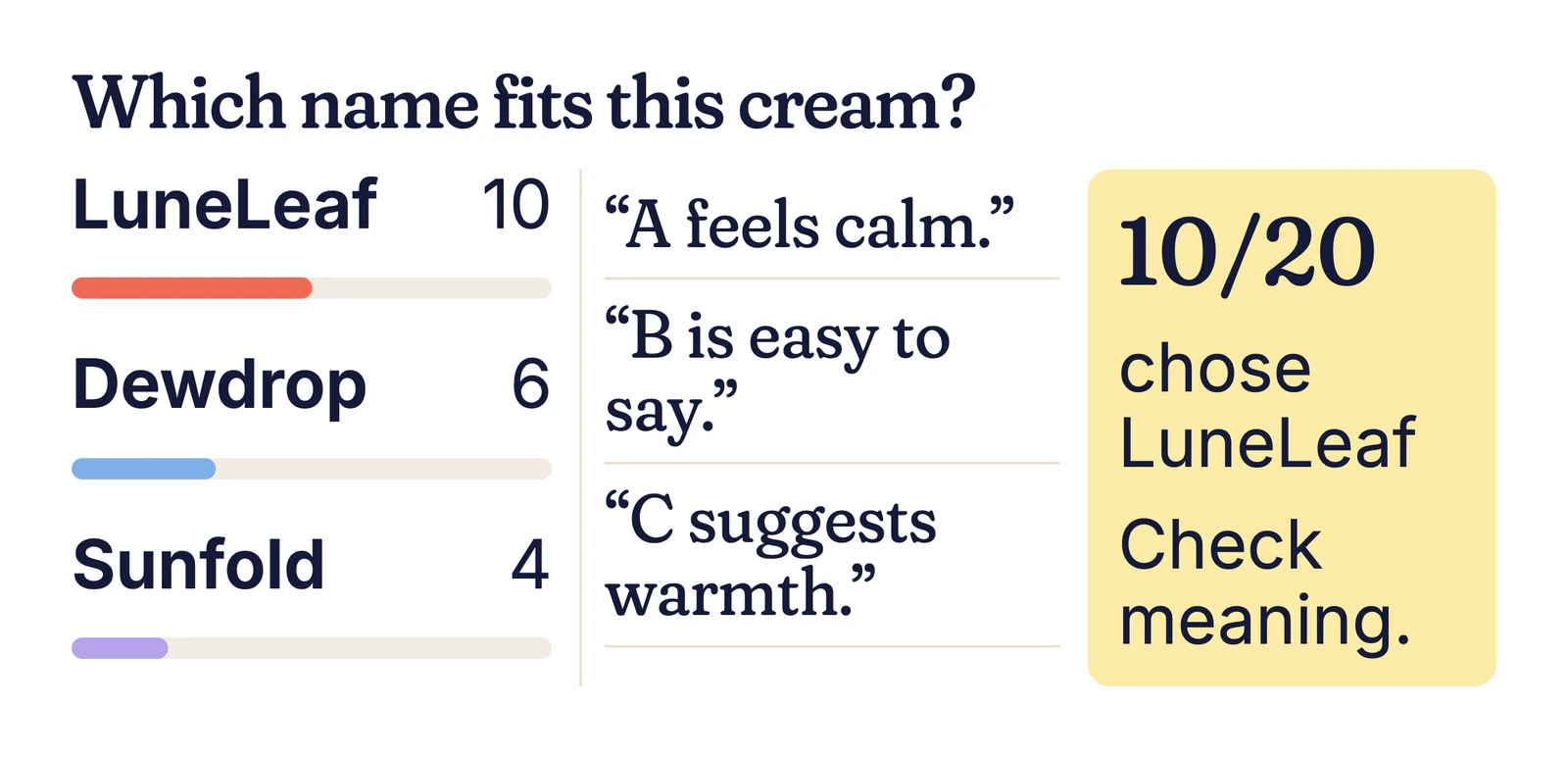
Illustrative face-cream example: LuneLeaf gets 10 of 20 picks, Dewdrop six and Sunfold four. People describe LuneLeaf as calm, Dewdrop as easy to say and Sunfold as warm. If the cream is meant to feel gentle, the first cue may help; if warmth is the point, the smaller Sunfold group is worth reading too. Do not send a label to print on the strength of this split alone. Check availability and try the leading name with your intended buyers.
Compare product names on the same label
Put up to three names on the same jar design. Keep the type size, colours and product photograph constant, so the words are the main change. Ask for a pick and one line of why, or run a separate first-impression check on what a name suggests. Members answer without seeing earlier votes.
Browse the Ask hub for other formats.
Why a first reading helps
A label can make a name feel different from the way it sounded in a meeting. Ask what someone expects from “Dewdrop” before sharing the team’s explanation. If they expect a light, water-based product and yours is a rich balm, that mismatch is useful even if the name wins.
Honest limit: The result is a first reading from mixed UK adults, not buyers selected for your category. It does not check market demand, domains or legal rights. Use the UK trade mark search and any relevant marketplace checks before investing in a name.

What it costs
Asking is free during early access, by invitation. At paid launch a quick take starts from 30p an answer plus 50p a question (launch example); 20 quick takes would come to about £6.50. You see the quote before asking.
Your questions, answered
How do I test a product name?
Put two or three names on the same product label and ask which one fits. Then test the leading name on its own with a meaning question. That second ask can reveal a misleading expectation that a pick-one vote misses. Keep the surrounding design the same in each version.
What makes a good product name?
A buyer should be able to say it, remember it and form a useful first impression. For the fictional moisturiser, LuneLeaf may sound appealing, but ask what people expect to find in the jar before ordering labels. A memorable name that signals the wrong product still has a problem. Check legal availability separately.
Should I test names on packaging?
Yes, if packaging is where shoppers will encounter them. Keep the surrounding design constant so you are not accidentally testing colour or typography. A text-only test can come first, but the label view may change how a name reads.
Does this check whether a name is available?
No. You can test product name ideas for meaning and preference here, but the service does not search trade marks, domains or marketplace listings. Start with the UK trade mark search and check the other places you plan to sell before investing in print.
How many product names can I compare?
The current pick-one format can show two or three options. Shortlist before asking if you have more. With three names, read the reasons behind each pick because a small three-way split may not point to a clear winner.
How much does this test cost?
Asking is free during early access, by invitation. The paid-launch example for 20 reactions is about £6.50: 30p per answer and 50p for the question. The quote appears before you post. If the chosen name will go on thousands of jars, allow time and money for the separate availability check too.
Find out what people really think.
Free during early access. No card needed.
Free during early access. We review requests by hand. Have an invite code? Join