Guide · Avoiding scams
Legit ways to earn money fast (and the scams to avoid)
7 minute read
Legit ways to earn money fast usually start with something you can sell or work you can arrange locally. Online surveys and micro tasks are real options too, but small tasks may pay little and payout can take time. PennyForYours is one option discussed here; its answers are unpaid during early access.

Key points
- Separate the time to do a task from the date money reaches your account.
- Selling something you own or a local job may be faster than waiting for an online task to appear.
- Check payment terms and withdrawal rules before starting a survey or task platform.
- Do not pay a fee to release earnings or give a job contact access to your bank account.
- Free debt advice is available through MoneyHelper if your concern is covering bills.
What “fast” really means
A task that takes two minutes may pay next month. A used item might take an afternoon to photograph, list and post, but pay when it sells. Look at three separate dates: when you can start, when the work or sale is accepted, and when the money becomes available to withdraw. A site that shows a balance without clear cash-out terms has not answered the last question.
Be wary of lists that rank every option by an hourly figure. Availability, acceptance and payment terms change. Choose a route you can assess from a real offer, with no money paid to join. If regular income matters, these small jobs are a poor substitute for work with an agreed rate and hours.
Legit ways to earn money fast online and locally
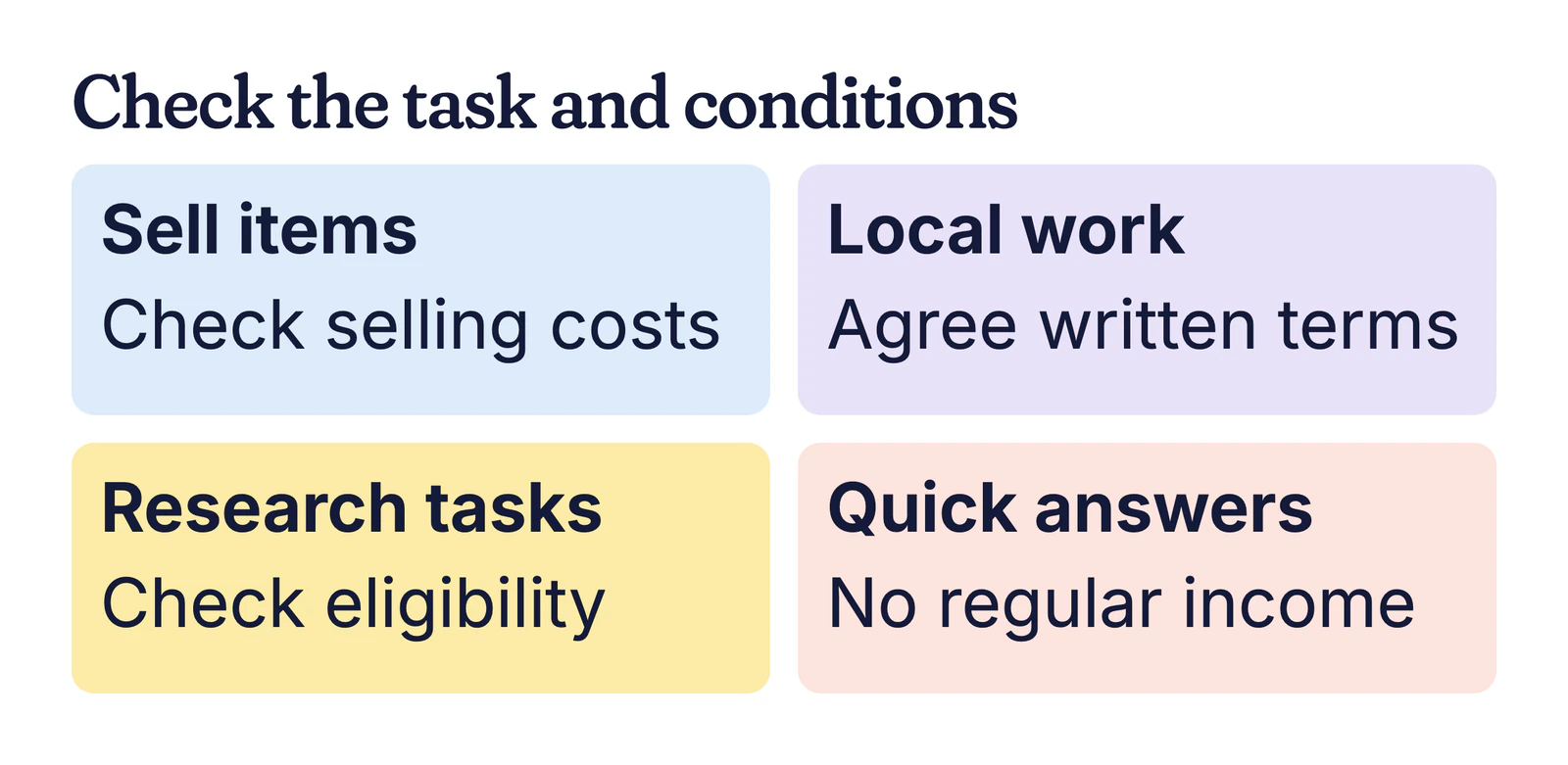
Sell something you already own
Find an item you no longer need, check its condition and compare similar listings. Good photographs and a clear description make a sale more likely, but there is no certain buyer or timing. Include postage and marketplace charges when deciding whether it is worth listing. Selling a personal possession is different from buying goods to resell; HMRC explains the tax distinction in its online-platform guidance.
Offer a skill with a defined small job
If you can edit a document, mend clothing or set up a spreadsheet, a one-off job may be easier to quote than an open-ended freelance service. State what the customer gets, when you can deliver and when payment is due. Check that the person and brief are real before handing over work. If someone hires you to mend a jacket, the work and fee can be agreed before you start. Finding that customer and delivering the repair still takes longer than tapping through a survey.
Take a local job
Pet sitting, gardening or event help may be arranged through people who can confirm the job directly. Ask about travel, safety, insurance and payment before accepting. A local booking might pay on completion; it might also cancel. Avoid any “employer” who asks you to move money for them, open an account in your name or buy supplies from a link they control.
Try surveys or opinion questions
Some surveys and question platforms offer small payments for completed answers. Qmee’s FAQ explains that a survey provider can decline a response if you do not match its criteria, and sets out Qmee’s withdrawal conditions. Check both before spending time on a task. Survey availability may not match your spare time. Read the UK survey-site guide for a closer look before joining.
Consider micro tasks
Small online tasks can be done in short gaps, but acceptance rules matter. Read the task and reward before beginning; take a screenshot of any stated terms if the platform allows it. Do not keep doing unpaid “training” tasks on a promise that a higher tier will open later. Compare the real time you spent with the amount actually paid.
Websites to earn money fast: how to check them
Start on the service’s own site rather than a direct message. Look for a named operator, clear terms, a working support route, and a plain explanation of who pays whom. Search for the exact withdrawal rules, minimum balance and any account checks. If the site claims to work with a known brand, verify the link from that brand’s official site. Do not treat a logo, app-store listing or polished dashboard as proof.
Try a small amount of work before investing more time. Record what you did, the reward displayed and the payment date. A real platform can still have poor terms for the time you have. The question is not only “is this site real?” but “will this particular task pay enough, soon enough, under rules I can understand?”
Warning signs in online work offers
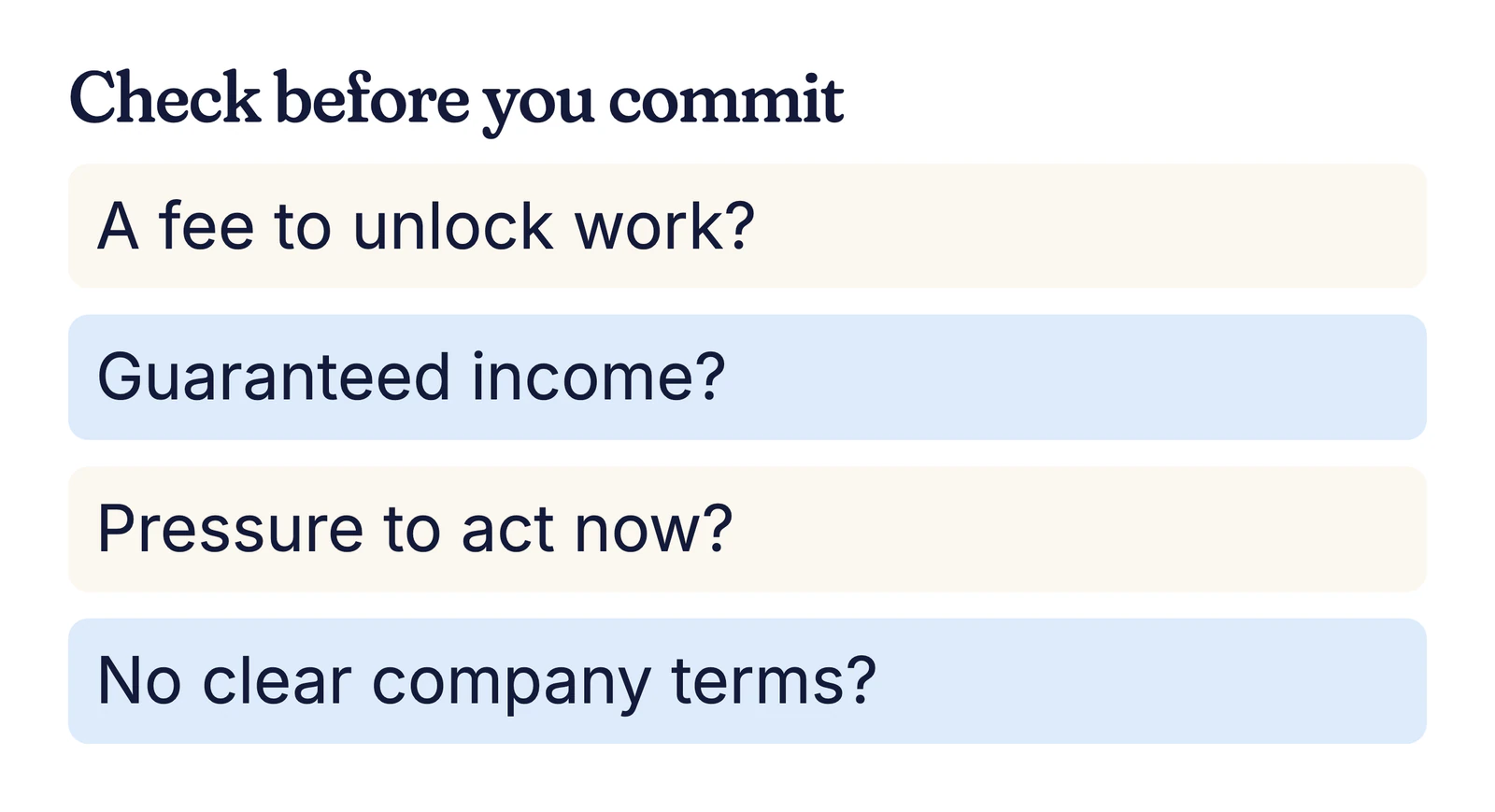
- An upfront fee, deposit or crypto transfer is required to access a task or withdraw a balance.
- A stranger approaches through a messaging app with a vague job and no verifiable employer.
- The offer asks for your bank login, remote access to your device or a transfer through your account.
- Payment terms change after you have done the work, or you are pressed to recruit friends.
GOV.UK warns that fake recruitment messages can arrive by text or WhatsApp and ask for upfront payments for supposed checks. That does not mean every job message is fraudulent, but it is a reason to verify the employer independently. The current UK reporting service for England, Wales and Northern Ireland is Report Fraud, which replaced Action Fraud in December 2025. In Scotland, report to Police Scotland on 101. If you have paid or shared banking details, contact your bank through a verified channel first.
Earn money fast for free: what can start without a fee?
Selling a belonging, offering an existing skill or asking about a local job does not normally require buying access to work. There can still be postage, travel or marketplace charges, so calculate what you keep. Paid surveys and micro tasks should state any platform terms before you begin. Refuse an offer that requires a payment to “verify” earnings or access a final task.
Some costs are legitimate in other contexts, such as materials for a craft business. The important difference is whether you chose a useful business expense yourself or a stranger is making a transfer a condition for receiving promised pay. If you are unsure, step away, check the operator and ask someone independent. A hurried deadline is a poor reason to override that check.
Surveys for quick money and their limits
Surveys are easy to fit around other commitments, but a short questionnaire does not promise a short wait for payment. Read screen-out rules, acceptance rules and cash-out terms. Qmee’s published FAQ describes declined surveys and withdrawal conditions on one platform. Our spare-time options page compares surveys with selling, skills and local tasks. HMRC’s trading allowance may matter if you earn from services or reselling; tax treatment depends on the activity and your circumstances.
If the concern is bills rather than finding a hobby, MoneyHelper’s debt advice locator points to free, confidential advisers. It is better to speak to an adviser than to rely on unpredictable online tasks for a fixed payment date. This is a signpost to support, not financial advice.
For PennyForYours specifically, the answerer hub and quick extra income page explain the current stage. The everyday-member page describes who this suits. The member board is for choosing questions by subject and displayed pay once paid questions open.
Where PennyForYours fits
PennyForYours is not a route to money this week. Answering is free during early access while we build our founding community. Paid answers start at launch. There is no launch date, instant payout or promise that joining now earns future work. Read what paid quick takes are planned to look like.
Sources
- GOV.UK: fake recruitment and DBS-check messages, upfront-fee and messaging warnings, checked 7 October 2026.
- Report Fraud: service replacement notice, 4 December 2025, checked 7 October 2026; current reporting routes, checked the same day.
- MoneyHelper: free debt advice locator, checked 7 October 2026.
- HMRC: online-platform income, checked 7 October 2026.
- Qmee FAQ, platform example of declined surveys and withdrawal conditions, checked 7 October 2026. The en-gb link may resolve to the en-us page.